Showing posts with label Maluku. Show all posts

Thursday, 26 October 2017

Raja Ampat - Banda Sea - Alor - Maumere

mazpadi blog
Raja Ampat - Banda Sea - Alor - Maumere
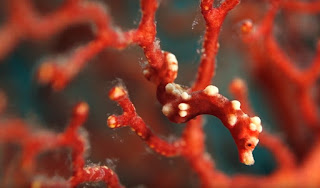
Raja Ampat - Banda Sea - Alor - Maumere

Raja Ampat - Banda Sea - Alor - Maumere

Raja Ampat - Banda Sea - Alor - Maumere

Raja Ampat - Banda Sea - Alor - Maumere

Raja Ampat - Banda Sea - Alor - Maumere

Raja Ampat - Banda Sea - Alor - Maumere

Raja Ampat - Banda Sea - Alor - Maumere

Raja Ampat - Banda Sea - Alor - Maumere
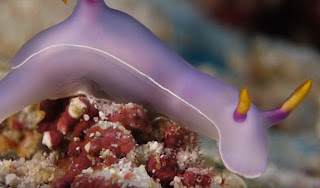
Raja Ampat - Banda Sea - Alor - Maumere
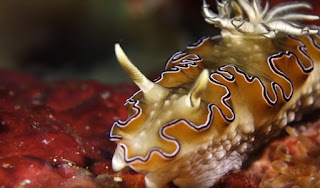
Raja Ampat - Banda Sea - Alor - Maumere
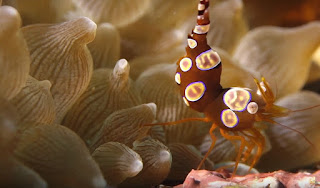
Raja Ampat - Banda Sea - Alor - Maumere

Raja Ampat - Banda Sea - Alor - Maumere

Raja Ampat - Banda Sea - Alor - Maumere

Raja Ampat - Banda Sea - Alor - Maumere

Raja Ampat - Banda Sea - Alor - Maumere

Raja Ampat - Banda Sea - Alor - Maumere

Raja Ampat - Banda Sea - Alor - Maumere Diving Cruise with Mermaid Liveaboards


Friday, 6 October 2017

Sunset in Ohoililir, Kei Islands, Moluccas

mazpadi blog
Sunset in Ohoililir, Kei Islands, Moluccas


Sunset in Ohoililir, Kei Islands, Moluccas

Just a bit of sunset feeling we got in Ohoililir, Kei Islands, Maluku Kei Islands is blessed with so many beautiful scenery


source:
Twitter @marischkaprue
Instagram @marischkaprue 

Saturday, 30 September 2017

Banda Islands a hidden treasure in Indonesia

mazpadi blog
Banda Islands a hidden treasure in Indonesia

Banda Islands a hidden treasure in Indonesia
pic. google.com

Bandanese people living in the capital city flocked to the National Gallery of Indonesia in Central Jakarta on Wednesday evening for the opening of Banda, Warisan untuk Indonesia: Pala and Perjanjian Breda 1667-2017 (Banda, Heritage of Indonesia: Nutmeg and the Treaty of Breda 1667-2017), an exhibition that runs until Oct. 4. 

Among them was Ramli Sondakh, 64. Bringing his nephew, he was excited to talk about the background story of a photograph showing Bandanese people from Maluku clad in the Cakalele war dance costume.

“They have five types of war dances. During the era of Dutch colonialization, they had no fear. But, they were afraid of only one thing: pig’s blood. If there was a pig present, they would run away,” he said, pointing to the black-and-white photograph.

The exhibition commemorates the 350th anniversary of the Treaty of Breda, signed on July 31, 1667, which ended the second Anglo Dutch war (1665-1667).

Opened by the Culture and Education Ministry’s director-general of culture, Hilmar Farid, the exhibition showcass at least 57 items, ranging from maps, photographs, books, paintings and installations.  

“We want to look at the history of what happened 350 years ago to see into the future. In the past, people came to Banda due to the stories of nutmeg. The function of nutmeg has changed in world trade, but Banda still has extraordinary stories,” Hilmar said.

Before the Treaty of Breda, the Dutch East Indies Company (VOC) and the British East India Company (EIC) competed to control nutmeg production in the Banda Islands, which consists of 11 islands, including the tiny islands Ai and Run. 

The VOC, who entered the Banda Islands after the Dutch conquered Ambon in 1605, wanted a worldwide monopoly of nutmeg — which at the time was the world’s most valuable commodity after gold — by forcing the Bandanese people to sell the commodity to them exclusively.  

However, they did not comply and continued to sell the commodity to the English, who had fortified trading posts on Ai and Run islands. For the Dutch, the English — who paid higher price for the nutmeg — were a threat to their monopoly. Their rivalry escalated, leading to the Amboyna Massacre, which was the killing of EIC workers in Ambon.

In 1621, Governor-General Jan Pieterszoon Coen sailed to Banda with 2,000 well-armed soldiers, killing thousands of people in the villages that resisted the VOC.  

Almost 2,000 people from the Banda Islands were brought to Batavia, now Jakarta, as captives, but hundreds of them managed to escape later on. Only around 1,000 people (less than 6 percent of the initial population) remained on the islands.  

The Treaty of Breda, ended the rivalry between the VOC and EIC. The English gave up their claims on Run and Suriname to the Dutch. In return, the English were given New Amsterdam, now New York, from the Dutch.

Under Dutch rule, the Banda Islands were also used as a place of exile for leading Indonesian figures, ranging from Tjipto Mangoenkoesoemo, Iwa Koesoemasoemantri, Sutan Sjahrir and Mohammad Hatta, who later became the country’s first vice president.

In the exhibition, two letters written by Hatta in 1937 to ask for a number of books during his years in exile are on display.

There is a photograph of Sjahrir, who stood in front of his car with his wife, Poppy Sjahrir, and his adopted children from Banda in 1946 in Jakarta. This picture showed the deep relationship between him and the Bandanese people before and after he became vice president.

Other photographs showcase the raw beauty of the Banda Islands, including the photo series “I Love Banda” by Isabelle Boon from the Netherlands.   

There is also a beautiful installation called Hallucinogenic, a look-alike statue dressed in a robe made of gold-plated nutmeg, with two hands that respectively hold a gold plated book and burnt wood.  

Created by artist Titarubi, the installation is named Hallucinogenic because nutmeg can cause hallucinations. Other side effects include headaches, nausea, dry mouth and memory disturbance.

The nutmegs are covered with gold to underline the fact that in the 16thcentury, European colonizers traveled all the way to Banda to hunt for nutmegs that were like a golden treasure for them. Meanwhile, the gold plated book symbolizes the people’s knowledge about nutmeg that they thought was worth gold during the era of Christopher Colombus.  

The burnt wood is a symbol of the pain of the Bandanese people, who were killed and enslaved by the Dutch. The large size of the shinning robe, which is larger than the size of the human body, symbolizes the arrogance of human beings over the knowledge they have.

Artist Made Wianta also delivers a similar message through his artwork called Treasure Islands, which comes in the form of orange and gold buffalo leather that is shaped to resemble the Banda Islands. Decorated with mirrors and nails, the work aims to remind people of the barren landscape on the islands after its treasure, nutmeg, was taken away by the colonizers. The gold color itself refers to the color of the spices.

Dutch curator Sadiah Boonstra, who is a member of the curatorial team, hoped that the exhibition, which was preceded by years of research, would make people more curious about the history of the Banda Islands.   

“The Treaty of Breda is a starting point for us to revisit, rethink, reinterpret and even rewrite the history of Banda. We are trying to provide multiple perspectives on this history,” she said.

Supported by the Dutch cultural center Erasmus Huis and Balai Arkeologi Maluku, the exhibition also aims to connect the past to the present because the treaty had a long-lasting legacy that people still experience today, she added.

Dutch Ambassador to Indonesia Rob Swartbol said that the Banda Islands were renowned for producing spices and as an international trading hub, long before the arrival of the Portuguese, who were the first Europeans on the islands. 

“The Dutch introduced nutmeg to the Netherlands in the 17th century. Trading spices made the Netherlands rich and encouraged the Dutch to continue exploration of the world. This exhibition gives us facts and new interpretations about what happened back then,” he said.   

source

Monday, 21 August 2017

Charming Southeast Maluku attracts more tourists

mazpadi blog

Charming Southeast Maluku attracts more tourists

Indonesia Travel Destinations

The charming Kei Islands in Southeast Maluku regency are gaining fame thanks to intense promotion from the Tourism Ministry, as well as a rapid development in hotel accommodation and transportation infrastructure.

The Kei Islands are located amid the Seram, Banda and Arafuru seas. Two of the largest islands are Kei Besar and Kei Kecil.

Kei Kecil Island is known as a hidden paradise due to its pristine environment.

An ideal destination for nature lovers, the best time of year to visit is April and May, and from October to December, when the sea is calm enough to allow visitors to properly explore the island and its surroundings, according to local elders.

When The Jakarta Post toured Southeast Maluku at the end of July, the island was barraged by rain and strong winds on a daily basis, making it difficult to explore its beauty.

The quickest and easiest way to reach the Kei Islands is by air.

From the Pattimura Airport in Ambon, visitors will need to take another plane for a one-and-a-half-hour flight to the Karel Satsuitubun Airport in Langgur, the capital of Southeast Maluku. This airport has replaced Dumatubun in Tual, which is now an Air Force base.

From Langgur, the wonders of this east Indonesian island group can be further explored. In fact, Southeast Maluku offers numerous charms in more remote locations.

Charming Southeast Maluku attracts more tourists
pic. google.com

Bair Island: The island’s unique landscape is a feast for the eyes with its clear waters and beautiful lagoons. (JP/P.J. Leo)

Charming Southeast Maluku attracts more tourists
pic. google.com

Sparkling: Hawang cave in Letvuan village is located 15 kilometers from the city of Langgur. The reflection of sun rays on the water creates a sparkling blue glow throughout the cave. (JP/P.J. Leo)

Charming Southeast Maluku attracts more tourists
pic. google.com

Ngurtavur beach: The name of the beach means “emerging sands.” It is one of Southeast Maluku’s most popular tourist destinations. (JP/P.J. Leo)

Charming Southeast Maluku attracts more tourists
pic. google.com

Pristine: Bair Island from another angle. Many tourists compare the beauty of this island to Papua's famous Raja Ampat. (JP/P.J. Leo)

Charming Southeast Maluku attracts more tourists
pic. google.com

Hoat Island: A local dries seaweed on Hoat island, which only has a handful of residents. (JP/P.J. Leo)

Charming Southeast Maluku attracts more tourists
pic. google.com

Ngurbloat beach: A resident sweeps up leaves at Ngurbloat beach, the name of which means (JP/P.J. Leo)

Charming Southeast Maluku attracts more tourists
pic. google.com

Welcome: A dock at Bair Island. (JP/P.J. Leo)


theJakartaPost

Thursday, 3 August 2017

Kei Islands still a hidden gem waiting to be explored

mazpadi blog

Kei Islands still a hidden gem waiting to be explored

Indonesia Travel Destinations

Kei Islands in the southeastern part of Maluku are reportedly attracting more and more tourists.
Kei Islands still a hidden gem waiting to be explored
Shutterstock, google.com

Home to Kei Kecil and Kei Besar islands, they can be reached by air via Karel Satsuitubun International Airport, which is located in Langgur district. Travelers can access the airport by hopping on a plane from Jakarta to Ambon, the fare starts from Rp 2.5 million (US$187).


In terms of accommodation, both islands have three-star hotels with starting rates of of Rp 400,000 per night. Affordable homestays are also available.
Kei Islands still a hidden gem waiting to be explored
instagram.com/adhe.rach/File

When on the islands, visitors can opt to stroll the soft, white sand on the beach or snorkel deep into the Banda Sea. They can also travel to Tanimbar Kei Island, which is only one hour away from Kei Besar Island, and explore a village where the majority of residents are Hindu.

Those planning to visit Kei Islands are recommended to go during Meti Kei from Oct. 22 to 23.

“Meti Kei is a phenomenon where the seawater recedes up to 6 kilometers,” Roy Rahajaan, the Southeast Maluku Tourism Agency, told kompas.com, adding that travelers can reach the other islands by foot during this period instead of using a boat.

Dubbed “the most popular hidden gem in Indonesia” by the Tourism Ministry in 2016, Kei Islands are still less known compared with other similar destinations, such as Raja Ampat and Wakatobi. Only 300 travelers reportedly visited the place in 2016 -- which is an increase compared to 2015 when it only welcomed 40 tourists. (wir/kes)

SOURCE

Facebook

Search This Blog

Ad Home

Gallery

Videos

4/recentcomments

Terbaru

Video

Rupiah Exchange

Column Left

4/recentposts

Featured

Travel News